
Return to Your Roots: Togbe Azagba IV Calls Mepe Citizens Home For the 70th Afenorto Festival —Chief Allays Fears of Communal Unrest And Tackles Palanquin Controversy
Ahead of the area's durbar, the reverred chief allayed fears of communal conflicts by addressing ongoing rumors that some chiefs had demanded to be carried in palanquins.

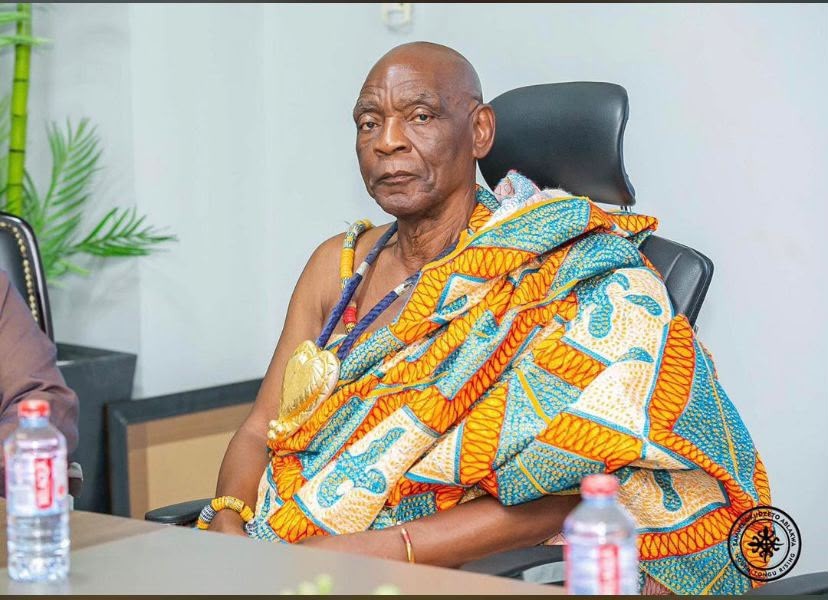
The Warrior chief of the Dzagbaku Divisional Clan of Mepe Traditional Area in the North Tongu District of the Volta Region, Togbe Kwadzo Azagba IV, has called on all citizens to return home for the 70th edition of the annual Afenorto Festival, effectively allaying fears of communal unrest and resolving the palanquin controversy.
Ahead of the area's durbar, the reverred chief allayed fears of communal conflicts by addressing ongoing rumors that some chiefs had demanded to be carried in palanquins.
"We, the members of the Mepe Traditional Council, officially wrote to advise those chiefs that we were initially not satisfied with their continued demands to be carried in palanquins during this year's annual festival," he explained.
"Following the Ad hoc research committee's report, we wrote to inform those chiefs of the required procedures. They have now complied, and we are satisfied to let them be carried in palanquins as they requested," the chief reaffirmed.
Reassuring the public, Togbe Kwadzo Azagba IV added, "Therefore, I can assure the citizens of Mepe that the festival will be celebrated successfully without any dispute.
Togbe Kwadzo Azagba IV outlined the tremendous benefits the chiefs and people of Mepe have significantly derived from the annual Mepe Afenorto Festival.
According to the chief, over the past 70 years, the celebration has brought tremendous value to the community by enriching traditions, fostering unity, and renewing the citizens' cultural identity.
He called on all citizens, both at home and abroad, to visit their ancestral home to celebrate the 70th edition of the Mepe Annual Afenorto Festival, which promises to be extraordinary.
While acknowledging that it is impossible to publicly deny the peaceful coexistence in Mepe, the chief stated that he also cannot admit to absolute peace and unity across all areas, families, and clans.
Togbe Kwadzo Azagba IV recognized that differences will always arise within any family, clan, or group. Nevertheless, he strongly urged all aggrieved factions within the society to bury their differences and unite for a common goal.
He called for an end to all societal disputes in Mepe, noting that the vision for the 70th edition of the Mepe Annual Afenorto Festival represents a new and extraordinary direction compared to previous celebrations.
He emphasized that for the citizens' goal of heavily investing in social and infrastructure development to succeed, it is essential for all and sundry to live in peace and unity.
He insisted that peaceful coexistence must endure in Mepe, warning that no one should engage in any activity that undermines the unity and peace of the area.
Togbe Kwadzo Azagba IV was quick to express frustration upon learning that the Mepe Development Association (MDA) had written to the Mepe Traditional Council stating they lacked the funds to organize the 70th edition of annual Mepe Afenorto Festival activities.
He stated that it would be a deep shame if the festival were cancelled due to a lack of local financing.
The Chief noted it is disappointing and disgusting that every year the MDA has to beg for funds from corporate institutions, politicians and philanthropists from other communities.
He argued that the financial responsibility lies squarely on the citizens of Mepe, and the people should not constantly expect outsiders to subsidize their traditions.
On Community Contributions
The Chief advised all citizens to contribute their quota to ease the burden on the chiefs and the MDA.
He stated that the continuous failure of citizens to contribute financially has become an area of major concern, especially since the people elect the MDA executives but fail to provide them with the funds needed to run the festival and developmental projects.
On Borrowing Resources:
Using a metaphor of borrowed light, the Chief remarked that the people of Mepe wanted to shine in public, but they went to borrow the lights to do so.
He asked what would happen if the borrowed lights failed and left the community in darkness.
He called on all citizens to join forces with the chiefs and the MDA to organize sustainable community festivals.
On Cultural History and Festival Processions:
Addressing the traditional significance of the festival, the Chief explained the history of how their forefathers arranged themselves during wartime.
He stated that the strategic formations used to protect their superior Paramount Chief during war are what they currently use for festival processions.
During durbar days, he said warriors were strategically positioned in front and behind the Paramount Chief to prevent enemies from attacking him and putting the traditional area in shame.
He emphasized that executing this proper process during the festival durbar signifies their rich cultural heritage
Togbe Kwadzo Azagba IV was speaking in an interview on the Mepe Reform Union WhatsApp group platform, hosted by the Union's Communications Director, Mr. Prosper Seloame Sevor, on Monday, July 2026, ahead of the festival.
The chiefs and people of Mepe in the North Tongu are fully prepared to celebrate the 70th edition of the Mepe Afenorto Festival, with the grand durbar taking place onSaturday, August 8, 2026.
Over the years, this festival has evolved into a major cultural event that unifies the five traditional clans of Mepe: Dzagbaku, Adzigo, Sevie, Gbanvie, and Akorvie.
The Afenorto festival—whose name translates to "period of rest at home"—focuses on community unity, cultural renewal, and mourning the victims of national tragedies.
This year's celebrations will feature traditional war dances, regattas, and cultural displays commemorating the rich history of the Mepe Traditional Area.
The roots of the festival are tied to the broader migration of the Ewe people from Notsie in present-day Togo.
Fleeing the tyranny of King Agokoli, the Ewes eventually settled in various parts of the Volta Region, including Mepe.
The Sagrenti War
The specific timing and annual commemoration as Afenorto emerged from Mepe's historic military alliance with the British against the Ashanti Kingdom in the 1874 Sagrenti War.
Mepe warriors fought with great valor, and their victory was celebrated by dancing to the traditional Agbekor war drums.
Meaning of Afenorto
Translated from Ewe as a "period of staying at home" or a "period of rest," the festival marks a time when occupational activities cease.
Historically, this allowed farmers and fishermen to rest after the major planting and fishing season and enabled citizens working across the country to return home.
Today, the festival serves as a critical mechanism for communal development. Indigenes living at home and in the diaspora use this homecoming to raise funds, resolve disputes, and plan developmental projects for the coming year.
The celebrations span over a week and are characterized by the display of the five traditional clans of Mepe (Dzagbaku, Adzigo, Sevie, Gbanvie, and Akorvie).
The grand durbar features chiefs and queen mothers in colorful regalia, traditional drumming and dancing (such as Agbekor, Asafo, and Atrikpui), and the firing of musketry
A brief history of Afenorto festival celebrated by the people of Mepe
AFenorto Festival – meaning “Period of Rest at Home” Festival -is the traditional festival of the Chiefs and people of Mepe Traditional Area. It is celebrated annually to renew the sense of oneness of the people.Holidays & Seasonal Events
It thus provides a unique opportunity for reunions, particularly bondage with the extended family and ancestors.
In 1874, General Sir Garnet Wolseley moved against the armies of the ambitious Ashanti Kingdom who were attacking the coastal tribes of the Gold Coast: the “Sagrenti War” (i.e. Sir Garnet War) as it came to be known.
Frightened by the magnitude of their forces, the Anlos chose to align with the Ashanti.
The gallant soldiers of Mepe, on the other hand, fought alongside the British colonial army for the freedom of the people of the coastline, an alliance that won most of the battles.Events & Listings
By this exceptional valor, Anlos gave Mepe the accolade “Mepe kukuruku, tsagblatsa, nekotsoe be yewoe bi dzo wu xe” – literally meaning “kernel shells (i.e. Mepe) had proven that they could produce superior quality fire compared to that which baphia nitidia (i.e. Ashanti/Anlo coalition) could” Baphia nitidia is a prickly tough wood well known for its burning prowess.
Mepe celebrated its battle victories by dancing to tunes of “Agbekor” war drums.
City & Local Guides
This became an established tradition, with our forefathers setting a day aside (at the end of July) for the annual commemorations of what came to be known as “Agbekortu”.
The period was chosen to deliberately overlap the recurrent floods caused by the yearly overspill of the Volta River.Geographic Reference
During this time, most economic activities (particularly clam picking, fishing and farming) along the banks of the river came to a standstill.
So, all citizens returned home (to Mepe) on a forced occupational holiday. “Apekpoe” (family and clan meetings) were convened to resolve differences, build bridges, and deliberate on issues of welfare, marriage and so on.
Nevertheless, there was a sudden event in 1918 when an unprecedentedly high incidence and morbidity rates of “Kpata’ (the great influenza) rocked the area, causing an abrupt interruption to the annual ritual for closely four decades.
Religion & Belief
A committee set up in 1951 to work on reviving the festival reported three years later the reinstating of the celebrations and recommended among other things that the “Agbekortu’ and “Time-out at Home” celebrations be integrated and christened”Afenorto” Festival.
As the dynamism of culture has never been in doubt, so Afenorto underwent some transformations in substance but maintained virtually the same pattern since its out-dooring in 1955.
The undying characteristics of Afenorto Festival are as follows:
City & Local Guides
Firing of musketry and sounding of “Atupani” (talking drum)
Libation at “Vesime” a location where twins were traditionally out-doored
A procession of chiefs and people of Mepe Traditional Area to durbar ground amid firing of musketry, drumming and dancing. Chieftaincy and customary regalia are displayed with splendor.
The order en route to durbar ground is as follows:
First comes Dzagbaku division dressed in white, followed by the Adzigo clan in green; Sevie follows cladded in yellow; Gbanvie comes next in red. At the rear is Akorvie dressed in assorted colours with the emblem of cockerel embossed.
The grand durbar is held on the second Saturday of August.
The celebrations span a little over a fortnight.
At the grand durbar, the chiefs and queen mothers sit majestically in state with their mace – their symbol of authority.
The paramount chief presents the welcome address to the guest of honour – usually a government official, who in turn gives a speech in apparent response to the paramount chief.
The grand durbar ends in the afternoon with the return of the chiefs in their palanquins to their respective palaces with pomp and pageantry.
The ensuing days are marked by special merry making some of which are targeted at raising fund to support developmental projects in the area.
State harvest, regatta, fun beach, and dances are some of the activities.
The town equally places a lot of premium on education and this is evident in the Afernorto programme featuring the annual speech and prize-giving day for all schools in the area.
After the cleansing of ancestral/ritual stools and final observance for the dead, the curtain is officially drawn on the festival. Non-residents then return to their various places of residence to patiently await the occasion to come around the following year.
What's Your Reaction?
 Like
0
Like
0
 Dislike
0
Dislike
0
 Love
0
Love
0
 Funny
0
Funny
0
 Wow
0
Wow
0
 Sad
0
Sad
0
 Angry
0
Angry
0