CONIWAS Urges Government To Scale Up Water Infrastructure For Vulnerable Communities And Climate Risks
She noted that although Ghana has made steady progress in basic water coverage, last-mile communities—including rural areas, peri-urban settlements, the urban poor, and persons with disabilities—continue to bear the heaviest burden of service gaps and climate risks.

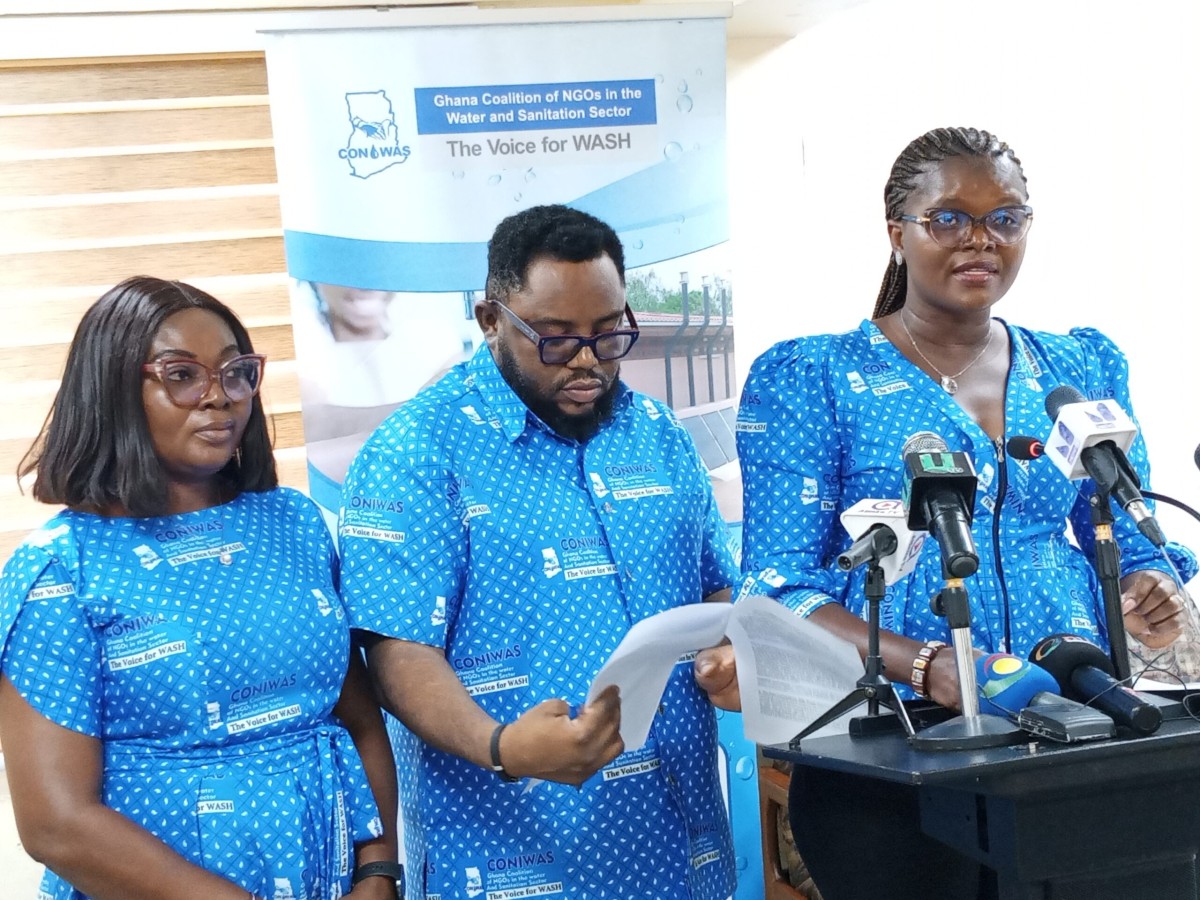
The Chairperson of the Coalition of Non-Governmental Organizations in Water and Sanitation (CONIWAS) in Ghana, Dr. Beata Awinpoka Akanyani, has called on the government of Ghana to invest heavily in water infrastructure initiatives to address severe service gaps and climate risks facing rural, peri-urban, and urban poor communities, as well as persons with disabilities.
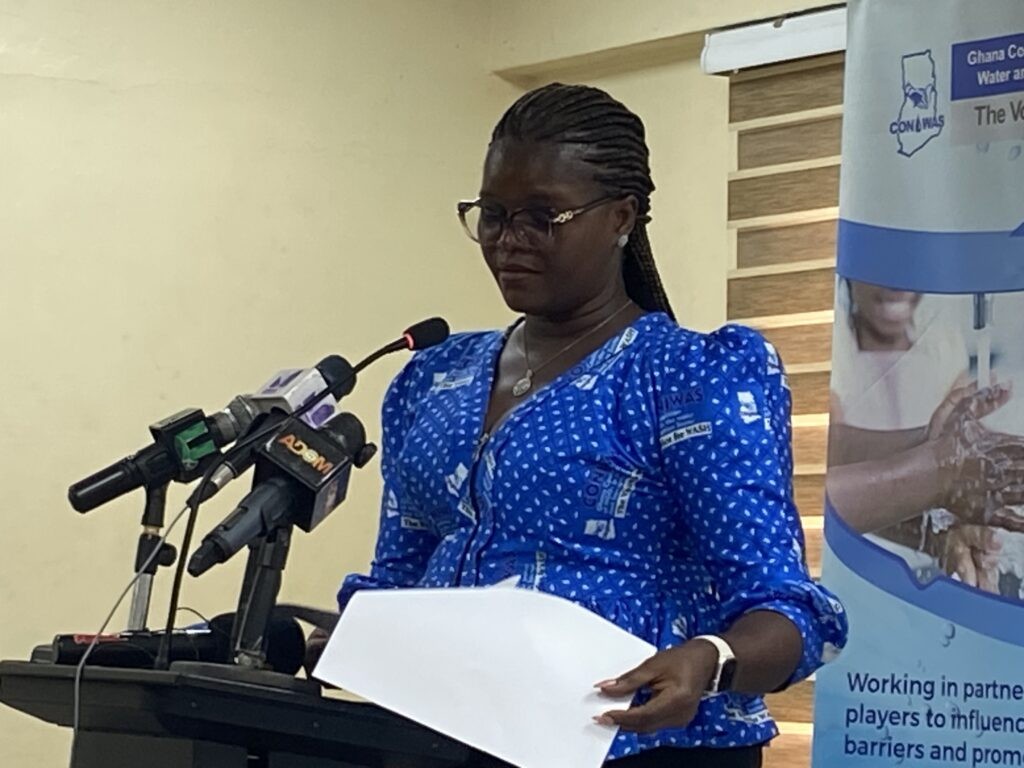
She noted that although Ghana has made steady progress in basic water coverage, last-mile communities—including rural areas, peri-urban settlements, the urban poor, and persons with disabilities—continue to bear the heaviest burden of service gaps and climate risks.
Dr. Akanyani pointed out that only about 17% of rural Ghanaians use safely managed drinking water, national basic sanitation coverage stands at roughly 32%, and 17.7% of the population still practice open defecation.
She disclosed that floods, droughts, coastal erosion, and the pollution of raw water sources by irresponsible mining threaten to reverse hard-won gains.
Therefore, she affirmed that reaching last-mile communities with climate-resilient Water, Sanitation, and Hygiene (WASH) services is a matter of both human rights and national development.
She stressed that achieving this requires political priority, sustainable financing, inclusive service models, and resilient institutions.
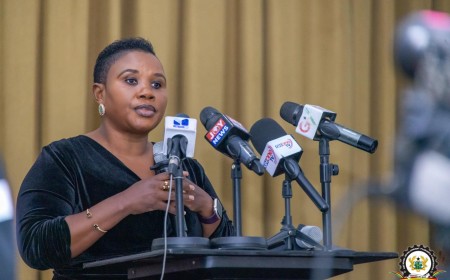
Dr. Akanyani made this call while speaking at a press conference on Wednesday, November 11, 2026, to update the general public on the communiqués from the MOLE WASH Conference held in Ada recently.
During the press briefing held in Accra today, Dr. Akanyani shared updates on the conference's expected outcomes, which were factored into the communiqué.
She noted that the annual MOLE WASH Conference is a civil society-led, multi-stakeholder platform for reviewing sector performance, influencing policies, removing barriers, and promoting access to sustainable water, sanitation, and hygiene services.
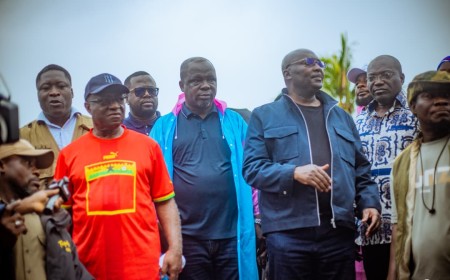
She maintained that the five-day conference was formally opened by Hon. Ahmed Ibrahim, the Minister for Works, Housing and Water Resources (MWHWR). Solidarity messages were delivered by the Development Partners Lead and the 2026/27 Child Sanitation Diplomat.
The District Chief Executive for the Ada East District and representatives from the Parliamentary Select Committee on Sanitation and Water Resources were also present at the opening.
The opening session was chaired by Nene Agudey Obichere III (Ada State Mankralo), representing the Paramount Chief of the Ada Traditional Area, Djetse Nene Abram Kabu Akuaku III.
The theme address was delivered by Ing. Michael Forson, Technical Advisor (WASH) at the Office of the President.
Deliberations were structured around four sub-themes: WASH as a Political Priority: Leadership, Governance, and Accountability, Sustainable and Innovative Financing for Reaching Last-Mile Communities, inclusive Service Delivery Options and Innovations for Last-Mile Communities
4. Climate-Resilient WASH in Institutions and Public Spaces and the MOLE XXXVII Conference was attended by 168 participants drawn from Ministries, Departments and Agencies (MDAs), Development Partners (DPs), civil society organizations, NGOs, community-based organizations, faith-based organizations, academic and research institutions, the private sector, traditional authorities, and the media.
Conference Resolutions
At the close of deliberations, the conference resolved as follows, making WASH a Political Priority through Effective Coordination.
The conference commended the Ministry for Works, Housing and Water Resources (MWHWR) and the Ministry for Local Government, Chieftaincy and Religious Affairs (MLGCRA) for their leadership in supporting WASH programs.
It recognized the urgent need to reactivate the Water and Sanitation Sector Working Group (WSSWG)—the highest coordination body for WASH in Ghana—to facilitate strategic decisions between ministers and development partners. The conference called on the MWHWR and MLGCRA to jointly reconvene the WSSWG within the first half of 2027 and hold regular meetings with published outcomes.
CONIWAS Commitment:
CONIWAS will support the reactivation of the WSSWG and engage the relevant parliamentary select committees between December 2026 and October 2027.
Sustainable and Innovative Financing, Public Financing for WASH (DACF, IGF, and GWASHSDP): The conference commended the President of Ghana, the Ministry of Finance, and the MLGCRA for allocating at least 20% of the District Assemblies Common Fund (DACF) to WASH at the Metropolitan, Municipal, and District Assembly (MMDA) level (10% for water and 10% for sanitation), alongside the commitment of US$1.7 billion per annum under the Ghana WASH Sector Development Programme (GWASHSDP) captured in the 2024 Ghana WASH Compact.
It urged the MLGCRA to ensure the timely and predictable release of these funds, encouraged MMDAs to allocate at least 5% of their Internally Generated Funds (IGF) to WASH, and called for annual reports on allocations and expenditures.
CONIWAS Commitment: CONIWAS will track DACF allocations, releases, and utilization in selected MMDAs between December 2026 and October 2027.
Pro-Poor Connections (GWL Social Connection Fund
The conference commended Ghana Water Limited (GWL) for initiating a Social Connection Fund to remove financial barriers for low-income households.
It recommended scaling up the fund to reach urban and peri-urban last-mile communities using clear eligibility criteria aligned with the Ghana National Household Registry (GNHR).
CONIWAS will support the design, monitoring, and evaluation of the scaled-up fund through October 2027.
Investment in Rural Water Services:
Noting that only 17.2% of Ghana’s rural population has access to safely managed drinking water, the conference called on the government to adopt a comprehensive rural water investment strategy and blended financing model that reduces over-reliance on declining grants while keeping services affordable for poor households.
CONIWAS Commitment: CONIWAS will support and track these efforts through evidence-based advocacy.
Sector Regulation and Governance
The conference reiterated the need to strengthen the regulatory environment for water and sanitation service delivery, particularly in rural areas.
It urged the MLGCRA and MWHWR to enact an Environmental Sanitation Bill to establish a regulatory entity, and to accelerate work on the proposed Water Services Act. These measures are targeted to be in place by October 2027.
CONIWAS Commitment: CONIWAS will contribute policy briefs and support the review and development of the regulatory framework through October 2027.
Call 4: Climate-Resilient WASH for Last-Mile Communities
Acknowledging the finalization of Ghana’s National Adaptation Plan (NAP) and Nationally Determined Contributions (NDCs 3.0), the conference called on the MWHWR, MLGCRA, Environmental Protection Authority (EPA), and National Development Planning Commission (NDPC) to cost WASH adaptation actions in medium-term district plans, mainstream climate-risk screening into WASH systems, and build a pipeline of bankable climate-resilient projects.
CONIWAS Commitment: CONIWAS will collaborate with the EPA, MLGCRA, and MWHWR to build member capacity, advocate for district adaptation plans, and track NAP implementation through October 2027.
Strategic Priorities and Recommendations
Professionalising Rural Water Service Delivery:
Transitioning from community-managed models to professional, performance-driven service frameworks is critical. The conference urged the Community Water and Sanitation Agency (CWSA) to engage openly with Small Water Enterprises (SWEs) and asked the MWHWR to develop guidelines for private sector participation.
Equity and the Human Rights to Water and Sanitation:
Ahead of the United Nations Water Conference (UNWC) in Abu Dhabi, UAE (December 8–10, 2026), the conference urged the government to champion the needs of last-mile communities. CONIWAS pledged to intensify post-conference advocacy for equitable water and sanitation access.
Climate-Resilient WASH in Institutions and Public Spaces:
Noting that only 16% of healthcare facilities in Ghana have basic sanitation services, the conference called on MMDAs, the Ghana Health Service, and the Ghana Education Service to enforce operation and maintenance (O&M) guidelines, assign clear management responsibilities, and allocate dedicated recurrent budgets for public and institutional facilities.
Water Security and Protection of Water Resources:
Condemning the degradation of major rivers and freshwater bodies by illegal mining (galamsey), the conference commended the Water Resources Commission (WRC) for its work in the White Volta and Black Volta Basins and recommended expanding watershed protection programs to other threatened river basins.
Monitoring, Accountability, and Follow-Up
CONIWAS, in collaboration with key stakeholders, will track the implementation of this communiqué using a results and accountability matrix
A six-month progress brief will be published by the CONIWAS Secretariat and Technical Committee by May 2027, ahead of MOLE XXXVIII.
The progress brief will also report on the status of MOLE XXXVI (2025) resolutions, including the Environmental Sanitation Bill, DACF releases, NAP monitoring, and anti-galamsey actions.
Sector actors are urged to align their annual institutional work plans with the outcomes of the communiqué, and a joint stakeholder dialogue will be convened before MOLE XXXVIII to assess progress.
What's Your Reaction?
 Like
0
 Dislike
0
 Love
0
 Funny
0
 Wow
0
 Sad
0
 Angry
0