GLOA Confirms KGL's Market Lead, Discourages Revenue Comparisons With The NLA
According to Section 2(1) of the National Lotto Act, 2006(Act 722), "National Lotto shall be conducted for the purpose of RAISING REVENUE for the NATION and for other purposes stated in this Act." Therefore, per Section 2(1) of Act 722, KGL has proven its worth in salt by helping the National Lottery Authority(NLA) to fulfill its number one(1) objective for which the Authority was established.

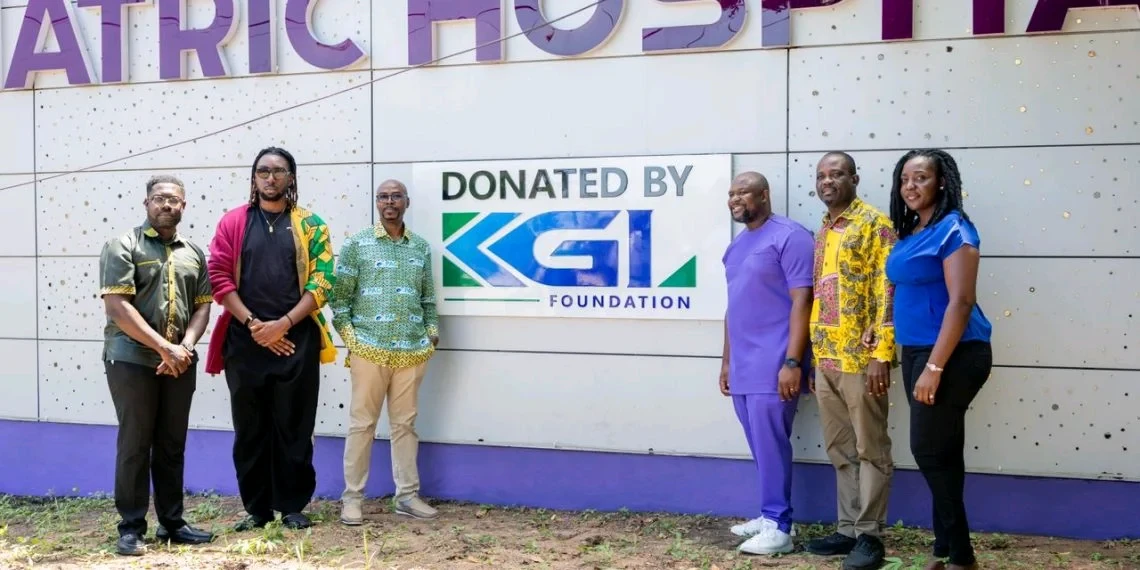
A press statement by the Ghana Lotto Operators Association (GLOA) urges stakeholders, the media, and the general public not to compare the GHS 44.9 million paid by some 29 licensed Private Lotto Operators to the NLA with the over GHS 173 million paid by KGL to the same institution. GLOA also confirmed that KGL is the largest contributor to NLA in terms of revenue generation for the Republic.
According to Section 2(1) of the National Lotto Act, 2006(Act 722), "National Lotto shall be conducted for the purpose of RAISING REVENUE for the NATION and for other purposes stated in this Act." Therefore, per Section 2(1) of Act 722, KGL has proven its worth in salt by helping the National Lottery Authority(NLA) to fulfill its number one(1) objective for which the Authority was established.
The primary purpose of establishing NLA is RAISING REVENUE for the NATION, not principally employment creation or engaging in grassroots economic activity. However, generating revenue automatically leads to job creation and grassroots economic activity, whether through its USSD platform, point-of-sale
terminals, or paper-based coupons.
Different Business Models
KGL operates as a collaborator under the same National Lotto Act, specifically Section 2(4) of the National Lotto Act, 2006(Act 722).
It is a fact that the Private Lotto Operators are not duly recognized under Act 722 since they are neither Lotto Marketing Companies or Collaborators.
Therefore, members of GLOA and all other Private Lotto Operators are supposed to be licensed and regulated by the National Lottery Authority(NLA) under Section 22(1) of the Veterans Administration, Ghana Act, 2012(Act 844).
It is not inherently flawed to compare GLOA's 44.9 million cedis to KGL's 173 million cedis because GLOA and its members still control 70-80% of the market share in the lottery industry, therefore, it is expected that GLOA would do better than making GHS 44.9 million payments to the Republic through NLA.
Exclusive Market Do NOT Automatically Create An Advantage
Staking of lottery by a Ghanaian citizen is an Optional duty, not mandatory like payment of taxes to GRA. It takes extremely huge investments into modern I.T. infrastructure, software systems integrations, ISO Certifications, and marketing to achieve the needed results in the mobile-based transactions.
Also attaining competitive advantage in that space is not by mouth but an expensive capital investment of about $500 million to $1billion to have the kind of Infrastructure architecture that KGL is currently operating in partnership with the Mobile Network Companies.
It is a LIE for anyone to say that access to a dedicated USSD platform substantially expands transaction volumes while reducing operational complexity. If that is the case then NLA would have been successful with the MOBI GAME 2 SURE in 2008, and MOBILE 5/90 between 2015-2017.
NLA through a collaborator started the operation of MOBILE 5/90 in 2015 and the revenues generated for 2015, 2016, and 2017 are respectively GHS 517, 967.50, GHS 1, 259, 185.10, and GHS 367, 812.30.
Due to the poor performance of the MOBILE 5/90, the National Lottery Authority(NLA) ceased its operations in 2017.
Again, the revenue generated by USSD/MOBILE *890# VAG Lottery Intake, USSD/MOBILE *890# NLA 5/90 VAG lotto intake respectively for 2020 were GHS 31, 786.85, and GHS 938, 005.14. Also, the poor performance of the *890# short code forced NLA and Tekstart Afrika Limited to cease operations.
These historical failures of the aforementioned digitalization projects by NLA and previous Collaborators cement and confirm that the success story of KGL did not come easy or cheap, but through tremendous work, dedication and investments into the operations of the company to ensure its success.
*KGL Carries Heavy Burden of Infrastructure Costs Far more than Costs Incurred by Private Lotto Operators*
Which member of GLOA or can the combined resources of GLOA match up to the unprecedent financial investments that KGL has poured into the sustainability of its operations at no financial cost or risk to NLA?
Investments into systems upgrade to align with the telecos come at financial costs running into millions of United State dollars, and system maintenance as well as creating fire walls around the project in order to control and prevent cyber fraud and attacks come at greater financial costs running into millions of United State dollars.
Payments of winning tickets to the winners of national lotto, and investments into Marketing and CSR equally come at costs running into millions of dollars.
KGL Remains the Largest Contributor to NLA's Revenue
KGL, apart from its statutory payments to NLA, also pays GHS 3 million annually to the NLA Stabilization Fund which was created by the Authority.
This fund is aimed at cushioning the Lotto Marketing Companies in the kiosks. In addition to that, KGL also pays GHS 2 million annually to support NLA's Good Causes Foundation. Each of the aforementioned payments by KGL is higher than the individual license fees of GHS 1.5 million paid by a Private Lotto Operator.
KGL Supports More than One Million Livelihoods too
Apart from the commitments to CSR and CSI Investments, KGL Group has provided jobs to millions of Ghanaians across the Country directly and indirectly.
MTN, Telecel, AirtelTigo, banks, advertising companies, media houses, and several companies are beneficiaries of KGL's existence.
Wider Economic Impact
The marketing & sustainability invetments undertaken by KGL also helps business in the economic ecosystem of Ghana to survive and expand, thereby retaining and employing more workers.
Through the KGL Foundation, the livelihood of millions of household have been significantly improved especially the youth population.
The contribution of KGL to the wider ecosystem of Ghana is over GHS 1 billion annually from payment of taxes, and investments into education, healthcare delivery and sports development.
Call for Holistic Evaluation
The lottery market space is still underdeveloped, and the space is big enough to accommodate KGL, Private Lotto Operators, and other Collaborators. Industrial harmony is key for each company licensed by NLA to realize its full potential.
Absolutely no one is against Private Lotto Operators and Agents. In several countries, the retail is over 60-70%, and the digital is 30-40%.
What the Private Lotto Operators need to do is to deploy modern Point of Sale Terminals or paper coupon with enhanced security features coupled with the right marketing strategies.
The REPUBLIC needs KGL to RAISE REVENUE in accordance with Section 2(1) of Act 722.
The REPUBLIC also needs the Private Lotto Operators, Lotto Marketing Companies, and Collaborators to create jobs for a number of people in the Kiosks across the Country.
Therefore, the REPUBLIC needs the services of all stakeholders in the lottery industry. Instead of fighting and undermining each other, the stakeholders duly recognized by the National Lottery Authority(NLA) should learn to peacefully co-exist in the lottery industry, raising revenue and creating jobs.
Source: Razak Kojo Opoku
Ghana Gas CEO Courts
Global Investors
...At Calgary Energy Show, Positions Ghana as West Africa’s Emerging Gas Hub
Chief Executive Officer of Ghana National Gas Company Limited, Judith Adjobah Blay, has projected Ghana’s burgeoning investment appeal in the natural gas sector to a global audience of investors and industry leaders at the ongoing Global Energy Show in Calgary, Canada.
Addressing one of the world’s foremost energy conclaves, Ms. Blay spotlighted Ghana Gas’ instrumental role in fortifying the nation’s energy security, catalyzing economic expansion, and advancing regional energy integration.
She unveiled strategic initiatives and lucrative investment prospects that firmly position Ghana as an ascendant energy nexus in West Africa and across the continent.
Ms. Blay noted that Ghana Gas manages the country’s principal midstream infrastructure, overseeing the gathering, processing, and transmission of natural gas to power plants and industrial centers.
According to her, the company supplies approximately 84 percent of the fuel consumed by thermal power plants, which constitute at least 60 percent of Ghana’s electricity generation matrix.
This intervention yields an estimated annual fuel cost saving of about US$1.3 billion, complemented by an additional US$60 million saved through Liquefied Petroleum Gas (LPG) supply.
She further elaborated that the Gas Processing Plant, built by SINOPEC in collaboration with Canada’s Thermo Design Engineering Ltd. (TDE), also produces condensate, or naphtha, used as a blend stock for premix fuel in the fisheries sector.
This innovation, she said, has driven down premix fuel costs and slashed government subsidy outlays by more than 60 percent.
On regional energy integration, Ms. Blay underscored Ghana Gas’ strategic alliance with the West African Gas Pipeline Company (WAGP).
Through an interconnection at Takoradi, Ghana’s gas supply hub, the partnership enables reverse gas flow to Tema, the nation’s dominant industrial and thermal power generation enclave.
She explained that the successful integration of Ghana Gas’ infrastructure with the West African Gas Pipeline in 2018 enabled bidirectional transmission, transitioning Ghana from a terminal gas-importing state to a pivotal player in the regional gas transmission architecture.
Beyond WAGP, Ms. Blay revealed that Ghana Gas is also a stakeholder in the proposed African Atlantic Gas Pipeline Project, envisioned to link Nigeria and Morocco with several African nations, including Ghana. Under this grand initiative, Ghana Gas will provide pipeline interconnections and compression stations, unlocking substantial investment opportunities while deepening Africa-Europe energy trade.
The Ghana Gas CEO emphasized that Liquefied Natural Gas (LNG) remains pivotal to Ghana’s long-term energy security blueprint.
She stated that future LNG investments will be anchored on commercial viability, affordability, and the imperative of preserving stable electricity tariffs. Ghana, she noted, has already deployed LNG regasification infrastructure and terminal facilities and stands ready to receive LNG imports when market dynamics become economically advantageous, particularly on pricing and payment terms.
Highlighting the next phase of growth, Ms. Blay invited investors to partner with Ghana Gas on its ambitious expansion portfolio.
Key projects include the construction of a Second Gas Processing Plant (GPP II), a 300-kilometer onshore gas transmission pipeline, and the Pentane Monetization Project.
She observed that while the existing Gas Processing Plant has ably served national demand, escalating consumption necessitates expanded processing capacity.
The proposed onshore pipeline, she added, will interconnect major industrial zones and resource corridors, further consolidating Ghana’s energy infrastructure.
She also announced that, in contrast to conventional facilities where pentane is flared, Ghana Gas is resolutely eliminating hydrocarbon flaring through advanced stabilization and conditioning technology.
This initiative, she said, will convert volatile hydrocarbons into safe, commercially viable products, representing a transformative leap aligned with the company’s Environmental, Social and Governance (ESG) commitments.
Ms. Blay expressed unwavering confidence in Ghana’s investment climate, citing robust legal frameworks, an independent judiciary, a competitive deregulated market, and political stability.
She stressed that Ghana’s strategic geographic position makes it an ideal transit and aggregation hub within the regional gas value chain, with property rights firmly protected and zero risk of expropriation.
Concluding her address, Ms. Blay reaffirmed Ghana Gas’s dedication to powering Ghana’s energy security, industrialization, and regional energy transformation.
“Ghana Gas is committed to creating value for investors while advancing Ghana’s energy security and strengthening regional energy integration across West Africa,” she declared
What's Your Reaction?
 Like
0
Like
0
 Dislike
0
Dislike
0
 Love
0
Love
0
 Funny
0
Funny
0
 Wow
0
Wow
0
 Sad
0
Sad
0
 Angry
0
Angry
0