
Complementary Education Agency–Central Region Hosts 59th International Literacy Day Celebration 2026
The CEA– Central Region joined the global community to promote lifelong learning and celebrate the transformative power of literacy in empowering individuals and building stronger communities.

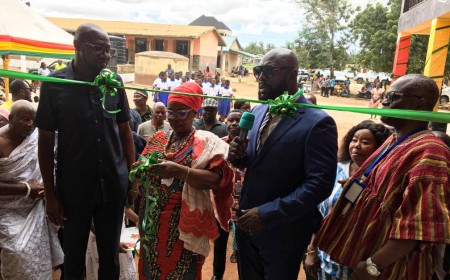
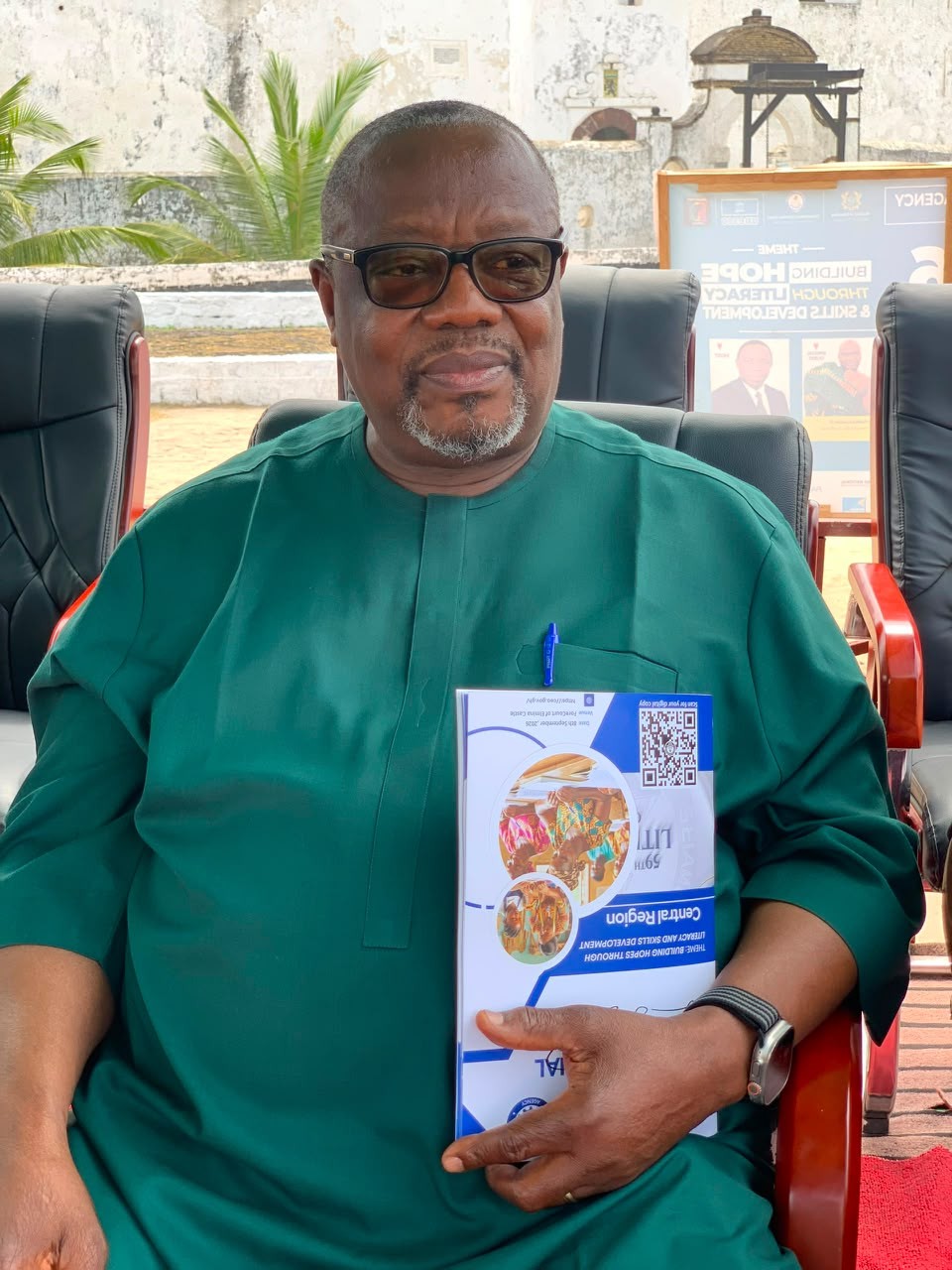
The Complementary Education Agency (CEA)–in Central Region has hosted the 59th International Literacy Day celebration, 2026, under the theme, "Building Hopes through Literacy and Skills Development."
The Complementary Education Agency of the Ministry of Education (Ghana) joined the global community to promote lifelong learning and celebrate the transformative power of literacy in empowering individuals and building stronger communities.
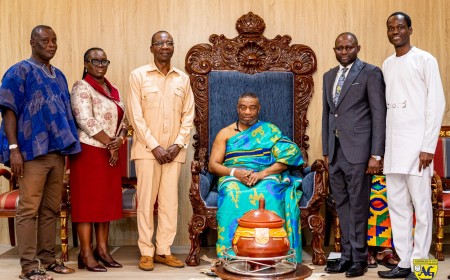
The first-of-its-kind event, held at the forecourt of the Elmina Castle, brought together prominent traditional rulers, religious leaders, students, politicians, and academics.
It was also attended by Members of Parliament, Metropolitan, Municipal, and District Chief Executives, representatives from the Ministry of Education, Heads of Departments, and Civil Society Organizations (CSOs).
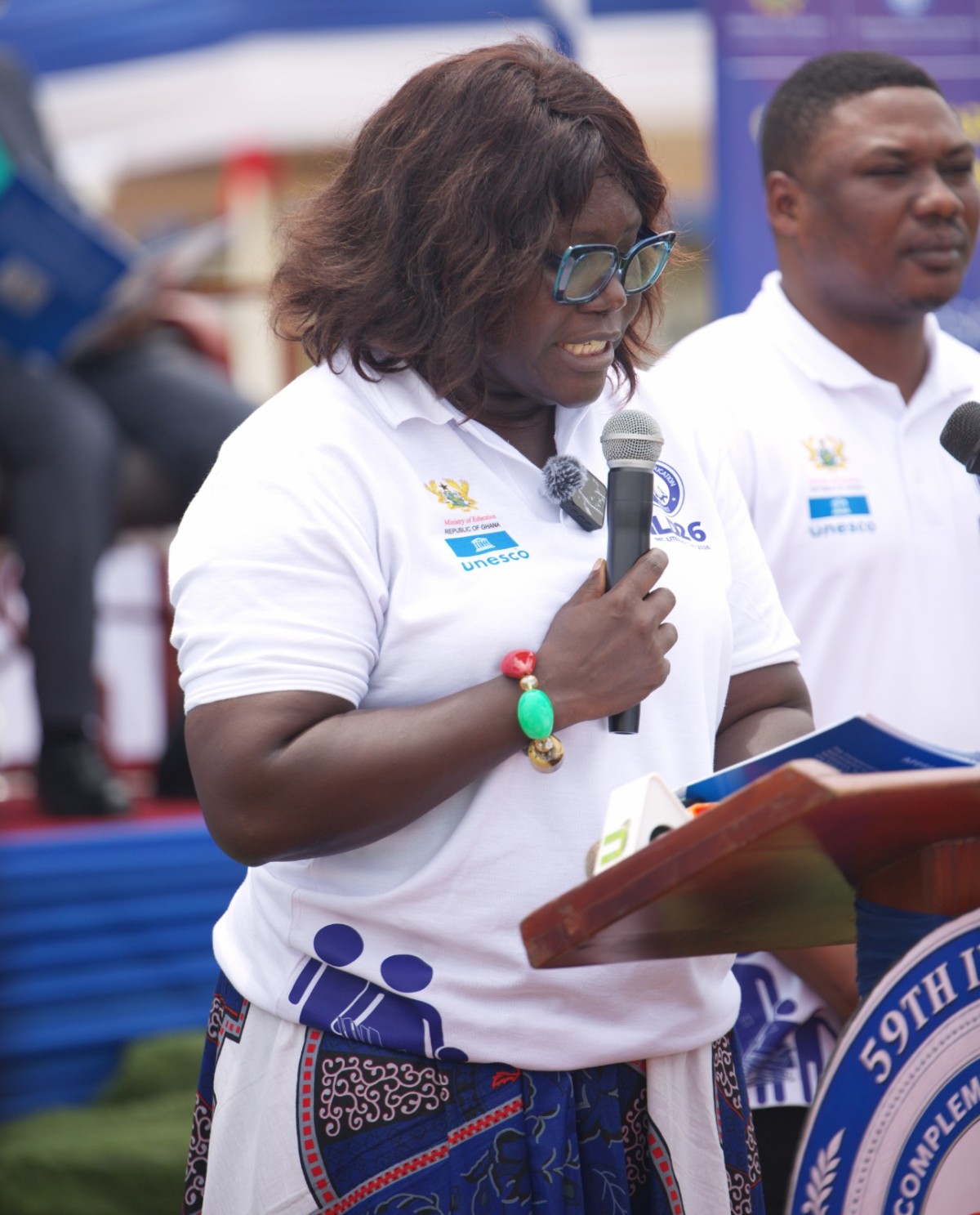
In her welcoming address, the Acting Central Regional Director of the CEA, Mrs. Esther Nana Yaa Ayensu Fianya expressed her deepest appreciation to everyone who stood by them during the event and called for their support to implement the vision and mission of the Agency.
She stressed that the Agency has a very important mandate to spearhead this onerous responsibility to help eliminate illiteracy and provide functional literacy.
However, she was quick to highlight that the Agency is saddled with many hindrances to its work.
She lamented that one of their major challenges is inadequate resources.
Their programmes require adequate funding, logistics, and teaching and learning materials, without which their ability to reach every deserving beneficiary is hindered.
She added that another major challenge is transportation and mobility, saying that the areas where most of their classes are located are geographically extensive, and many of the communities requiring attention are located in remote areas rather than urban centers.
She stated that effective supervision, monitoring, and community mobilization therefore require adequate vehicles and logistical support.
"This is almost completely absent, and we struggle a lot when we are required to travel for assignments," she said.
"We are also confronted with inadequate office and programme infrastructure in some areas. We need an environment that enables our staff and facilitators to work effectively, and our learners to study under appropriate conditions," she further disclosed.
In light of these challenges, Mrs. Ayensu urged the government and development partners to consider supporting the construction of learning centres for the Agency in each district.
She stated that these well-resourced learning centres would serve as one-stop centres where the various programmes of the Agency can be effectively implemented, thereby improving access to quality complementary education and skills development across the districts.
She further appealed to the Administrator of the District Assemblies Common Fund (DACF) to continue providing annual financial support to the Complementary Education Agency (CEA) for the implementation of its Complementary Basic Education (CBE) Programme through the DACF Accelerated Learning Programme.
She pointed out that the CBE Programme provides educational opportunities for out-of-school children aged 8–16 years, enabling them to acquire basic literacy, numeracy, and other essential skills.
"We also appeal for DACF support for the Agency's Occupational Skills Development (OSD) Programme, which provides practical and employable skills training to disadvantaged and vulnerable persons, particularly women, to promote self-employment, income generation, and improved livelihoods," she stressed.
According to her, continued DACF support for these programmes will help expand access to education, reduce the number of out-of-school children, empower disadvantaged persons, and contribute to sustainable community development.
Mrs.Ayensu further emphasised that they strongly believe human resource capacity is another area that deserves attention.
She said the growing demands on the Agency require adequate staffing, personnel, and the necessary tools and equipment for effective work.
"We actually need staff to work with. We are gently appealing to the authorities to grant us the opportunity to recruit enough staff since our population keeps dwindling through retirement," she stated.
She stressed the need for institutional collaboration with various Ministries, Departments, and Agencies.
"To our development partners and civil society organizations, we appeal for partnerships, resources, and technical support. To our traditional authorities, we appeal for your continued leadership in mobilizing your communities during our community entry activities," she said.
She pointed out that these challenges were not mentioned today during the 59th International Literacy Day to discourage anyone, but rather to raise awareness because she believes that together, they can overcome them.
She extended the Agency's appreciation to the Central Regional Minister and his team of MMDCEs, as well as the Administrator of the District Assemblies Common Fund, for their continued support and assistance with our programmes and activities.
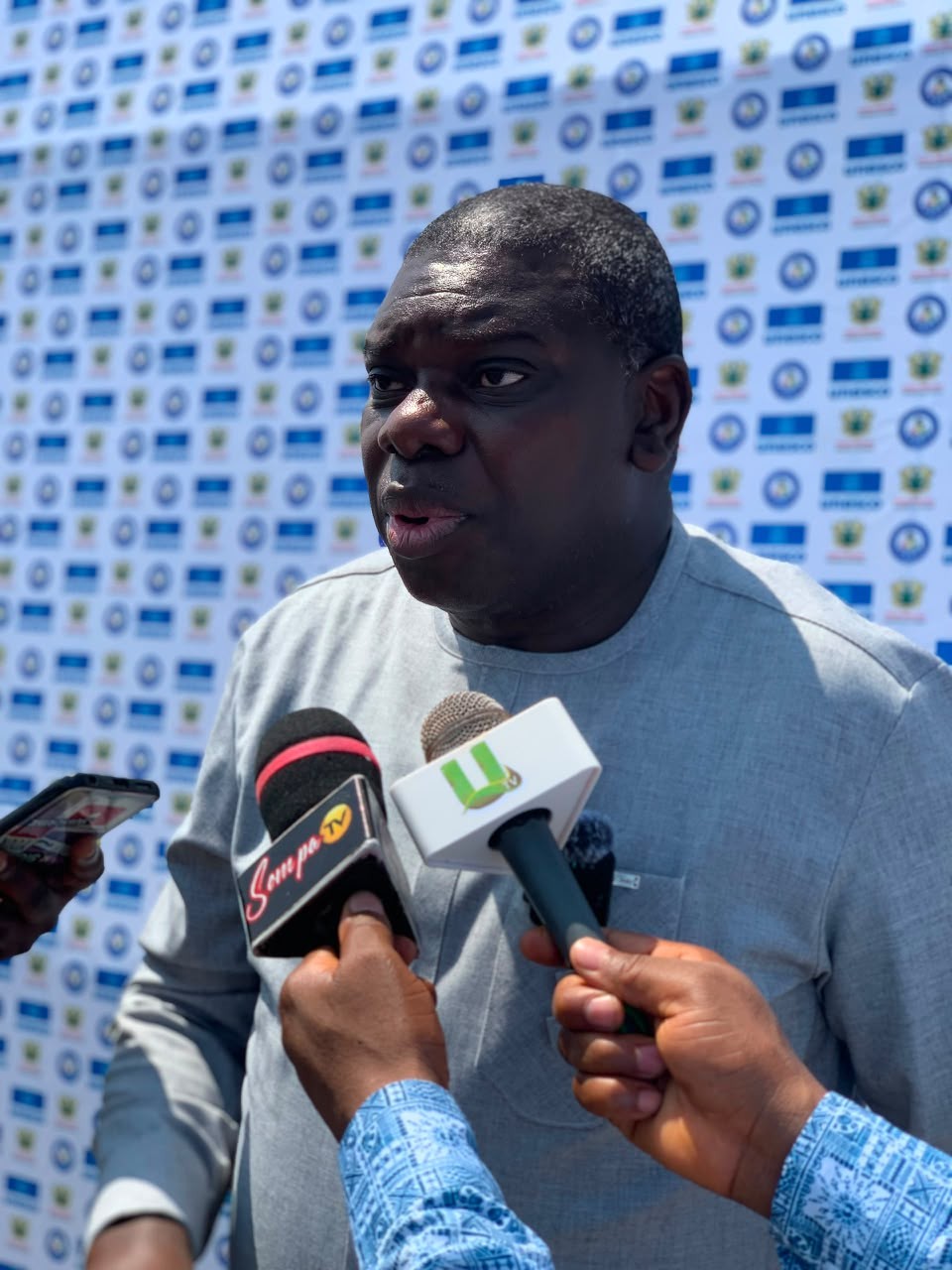
In his keynote address, the Member of Parliament (MP) Komenda-Edina-Eguafo-Abrem Constituency, Hon Samuel Atta-Mills pointed out that the literacy remains one of the most powerful tools we possess for breaking the cycle of poverty and inequality.
According to him, a literate citizenry makes informed decisions, safeguards its health, embraces innovation, and participates fully in the life of the nation.
"But we must be honest with ourselves: literacy alone is no longer sufficient. The demands of our time call for practical skills alongside academic knowledge, technical, vocational, entrepreneurial, and digital competencies that translate learning into livelihood. It is the union of literacy and skills that gives hope its practical form," the MP advised.
He added that as a nation, Ghana has made commendable strides in expanding access to education.
Yet according to the MP, we cannot celebrate today without acknowledging that many children, particularly in rural and underserved communities, still struggle to acquire foundational literacy and numeracy.
According to him, too many young people leave school without the competencies to compete in a changing job market.
He observed that this is not a challenge for government alone to bear, stressing that It calls for the shared resolve of educators, parents, traditional authorities, development partners, civil society, and the private sector, working as one.
"Allow me to pay tribute to our teachers, whose quiet dedication shapes the destiny of every child who passes through their hands, often under difficult circumstances and with limited resources," the MP noted.
"Allow me to pay tribute to our teachers, whose quiet dedication shapes the destiny of every child who passes through their hands, often under difficult circumstances and with limited resources," the MP noted
He equally commended the parents and guardians here today, whose encouragement at home is the soil in which learning takes root.
To the students and young people in the Central Region, the MP urged them to make reading a lifelong companion rather than a task confined to examinations.
He noted that reading sharpens thinking, broadens the world, and prepares youth for leadership.
He advised students to pursue practical skills with equal seriousness in agriculture, fashion, carpentry, information technology, entrepreneurship, and beyond.
He challenged the younger generation to create employment rather than merely seek it, emphasizing that skills development is a vital partner to formal education that Ghana urgently needs.
The MP noted that literacy in the 21st century extends to the digital space. Every learner deserves the ability to use technology with confidence and responsibility, access reliable information, and participate in the digital economy. Investing in digital education today means investing in Ghana's future.
The MP called on all leaders, stakeholders, and partners present to renew their investment in schools, libraries, ICT centers, teacher training, and adult literacy programs.
He stressed that no child should be denied an opportunity because of poverty, disability, gender, or geography, and that this must remain a shared, unwavering commitment.
Hon. Samuel Atta-Mills pointed out that literacy unlocks opportunity, while skills development turns the key. Together, they build confidence, dismantle unemployment, and strengthen communities.
He urged the nation to let the event mark a renewal of purpose to champion reading, lifelong learning, and skills acquisition, concluding that every child who learns to read and every youth who gains a skill builds a brighter, more prosperous future for Ghana.
The Executive Director of the Agency, Mr Daniel Kwesi Ashiamah whose speech was read on his behalf by Mrs. Patience Efie Abue Dogbey stated that their gathering at the event shows that concerns about literacy and lifelong learning are a unifying force that draws them together.
Furthermore, she expressed her deepest appreciation to the media, academia, and civil society, noting that they play a significant role in the transformation agenda within the complementary education space.
She stated that it is not lost on me how media outlets in particular bring us closer to our target audience.
She was of the view the Complementary Education Agency is responsible for delivering complementary education in Ghana.
According to Mrs. Dogbey this encompasses the Complementary Basic Education (CBE), Occupational Skills Development (OSD), Remedial Education Programme (REP), and Functional Literacy Programme (FLP).
In other words, she said that the Agency remains the third force in the provision of education in Ghana, alongside the Ghana Education Service and the Ghana TVET Service.
She reaffirmed that the complementary education space is dynamic, and so are the delivery channels needed to achieve quality learning outcomes. You will agree with me that the only constant in this world is change.
"Hence, to keep delivering literacy that meets the demands and expectations of our learners, the delivery channels cannot be stagnant.
The strategies must constantly evolve based on research and consensus," she noted
Mrs. Dogbey publicly shared the success story of the CEA, disclosing that currently, the Agency has recruited 10,000 out-of-school children in 320 communities across four Regions and 12 Districts.
She indicated that they were expected to enrol 30,000 learners.
She said due to financial constraints, the Agency had to acknowledge the necessity and scale down to the current numbers.
Additionally, the OSD programme has trained 175 women in the Volta and Oti Regions in various Income-Generating Activities, such as detergent, liquid soap, pomade, and soap production.
In contrast, she disclosed that the Remedial Programme has offered a second chance to
260 learners to transition to formal school.
According to Mrs Dogbey, the Agency is not seeking to expand by numbers, but through impact and access to quality and inclusive education.
Therefore, she stresed that lasting relationships, partnerships, and collaborations of mutual benefit
remain key to achieving the organisation's long-term expectations.
She maintained that the complementary education ecosystem is not only financially constrained but also faces the emerging force of Artificial Intelligence (AI) in the space.
She said literacy has become a key enabler for anyone in the present dispensation to aim at and earn a bite of AI.
According to her, the delivery system and structure must change to ensure the non-literate get leverage.
"She stressed once again that this situation calls for a major investment in information technology, though she pointed out that the Agency is actively seeking partners in this area.
"We must ensure that learners are properly factored into our technology transformation agenda; otherwise, wide disparities could emerge between literate and non-literate members of our communities.
"We must pay critical attention to how policies in this field are implemented, ensuring that out-of-school Ghanaian children are not discriminated against in policy formulation and execution.
Given that these learners represent 30.2 percent of our population, neglecting them could have severe consequences for our national development agenda.Their literacy is non-negotiable, she noted.
She also asserted, referencing the 2021 Population and Housing Census, that 63 percent of adult women in Ghana are non-literate—a figure mirrored in the 2026 UNESCO Concept Paper for International Literacy Day.
She said this paper indicates that, across three decades of data, 63 percent of women globally remain non-literate.
She noted that this trajectory must change, given the profound impact literate women, young or old, have on society and humanity.
She emphasized that we must work together to eradicate this unfortunate trend, which negatively impacts development.
Furthermore, she disclosed that the adult literacy rate for individuals aged 15 and above stands at 79 percent according to the UNESCO Institute for Statistics.
This rate still requires a significant push, particularly in Africa, where a large portion of the population is young.
Finally, she assured everyone of the Agency's firm commitment to connecting with partners and collaborators in delivery, strategy, and policy to achieve our desired levels of literacy."
Speaking at the event, the Central Region Minister, Mr Eduamoah Ekow Panyin Okyere, endorsed the theme, mission and vision of the Agency and pledged his commitment to support its mandatory activities to help the youth in its operational communities.
According to him, this year's theme, "Building Hopes through Literacy and Skills Development," could not be more fitting for the Central Region.
The Minister stated that literacy is not merely the ability to read a page or sign one's name, but rather, the foundation upon which hope is built—hope for a mother who can now read the dosage on her child's medicine, hope for a young apprentice who can follow a manual and grow a trade, and hope for a farmer who can interpret weather advisories and safeguard a season's harvest.
He pointed out that when we teach a person to read, we do not simply transfer a skill. We restore to that person the dignity of choice, and we open a door that poverty and circumstance may have long kept shut.
The Minister commended the Complementary Education Agency, under the able leadership of the Central Regional Director, Madam Esther Ayensu, for the tireless work being done across "our Metropolitan, Municipal, and District Assemblies to bring functional literacy to adults and out-of-school children in every corner of this region."
According to him, this work is quiet, patient, and rarely receives the applause it deserves, "yet it is some of the most transformative work being done in our region today."
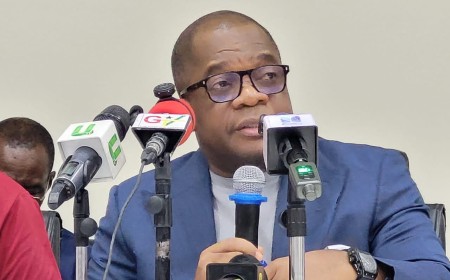
The Administrator of District Assemblies Common Fund, Mr Michael Ekow Harry Yamson, who chaired the fuction and speaking at the 2026 International Literary Day Celebration at the Forecourt of Elmina Castle, said eradicating illiteracy must be treated as a political priority backed by real funding and strong governance.
Mr. Yamson stressed the need for stakeholders to commit themselves to ensuring that every child in our communities discovers a different doorway—a doorway of opportunity, dignity, hope, and achievement through literacy and skills development.
'We are not merely opening learning centers; we are unlocking human potential. We are not merely teaching children to read and write. We are building stronger communities, a more productive workforce, and a more prosperous Ghana.'
He stated, 'Together, let us continue to build hope through literacy, skills development, and inclusive opportunities for every child.'
He also expressed his gratitude to the traditional authorities and the Complementary Education Agency for their continued support in advancing literacy.
What's Your Reaction?
 Like
0
Like
0
 Dislike
0
Dislike
0
 Love
0
Love
0
 Funny
0
Funny
0
 Wow
0
Wow
0
 Sad
0
Sad
0
 Angry
0
Angry
0