

EPA Plans to Remove Federal Limits on Power Plant Climate Pollution
The Trump administration is preparing to eliminate federal limits on greenhouse gas emissions from power plants, a move that would mark another major reversal of climate policies established under previous administrations.


The Trump administration is preparing to eliminate federal limits on greenhouse gas emissions from power plants, a move that would mark another major reversal of climate policies established under previous administrations.
The Environmental Protection Agency is expected to announce the change Monday during a gathering of energy ministers from the Group of 20 nations in Houston, according to people familiar with the proposal. EPA Administrator Lee Zeldin is expected to present the plan, although the agency had not publicly confirmed the announcement as of Sunday evening.
Power generation is one of the largest sources of carbon dioxide and other greenhouse gases in the United States. These emissions contribute to the buildup of heat-trapping gases in the atmosphere, which scientists associate with rising global temperatures and increasingly severe weather conditions.
The proposed change would remove federal requirements specifically aimed at limiting greenhouse gas emissions from power plants. The administration argues that previous climate regulations placed significant financial and operational burdens on the energy industry. Environmental organizations and climate experts, however, have criticized the proposed rollback and indicated that legal challenges are likely.
The move would continue the Trump administration’s broader effort to dismantle climate regulations established during the Obama and Biden administrations. The EPA has already taken steps affecting vehicle emissions and restrictions on certain chemicals used in refrigeration and air-conditioning. The agency has also reversed the scientific finding that previously provided the legal foundation for federal regulation of greenhouse gases.
The new proposal would not eliminate every environmental requirement affecting power plants. Facilities would continue to face regulations concerning pollutants such as mercury, arsenic and other harmful substances, although some of those restrictions have also been relaxed under the current administration.
The Biden administration finalized its power-plant climate regulations in 2024. Those rules targeted existing coal-fired facilities and certain future natural-gas plants. Compliance options included technologies designed to capture carbon emissions before they entered the atmosphere, as well as the use of lower-emission fuels such as hydrogen.
Federal officials under President Biden estimated that the regulations could produce substantial public-health benefits by reducing pollution. The administration projected that the rules could prevent premature deaths, hospital and emergency-room visits, asthma attacks and lost school and workdays over time.
The Trump EPA has taken a different approach to evaluating the economic effects of air-pollution regulations. Rather than placing the same emphasis on projected health benefits from pollution reductions, the agency has focused more heavily on the costs businesses would face in complying with environmental requirements.
The coal industry has strongly opposed the Biden-era rules, arguing that meeting the requirements could force aging power plants to close because installing new pollution-control systems would be too expensive. Industry representatives have maintained that the regulations could threaten the reliability and affordability of electricity.
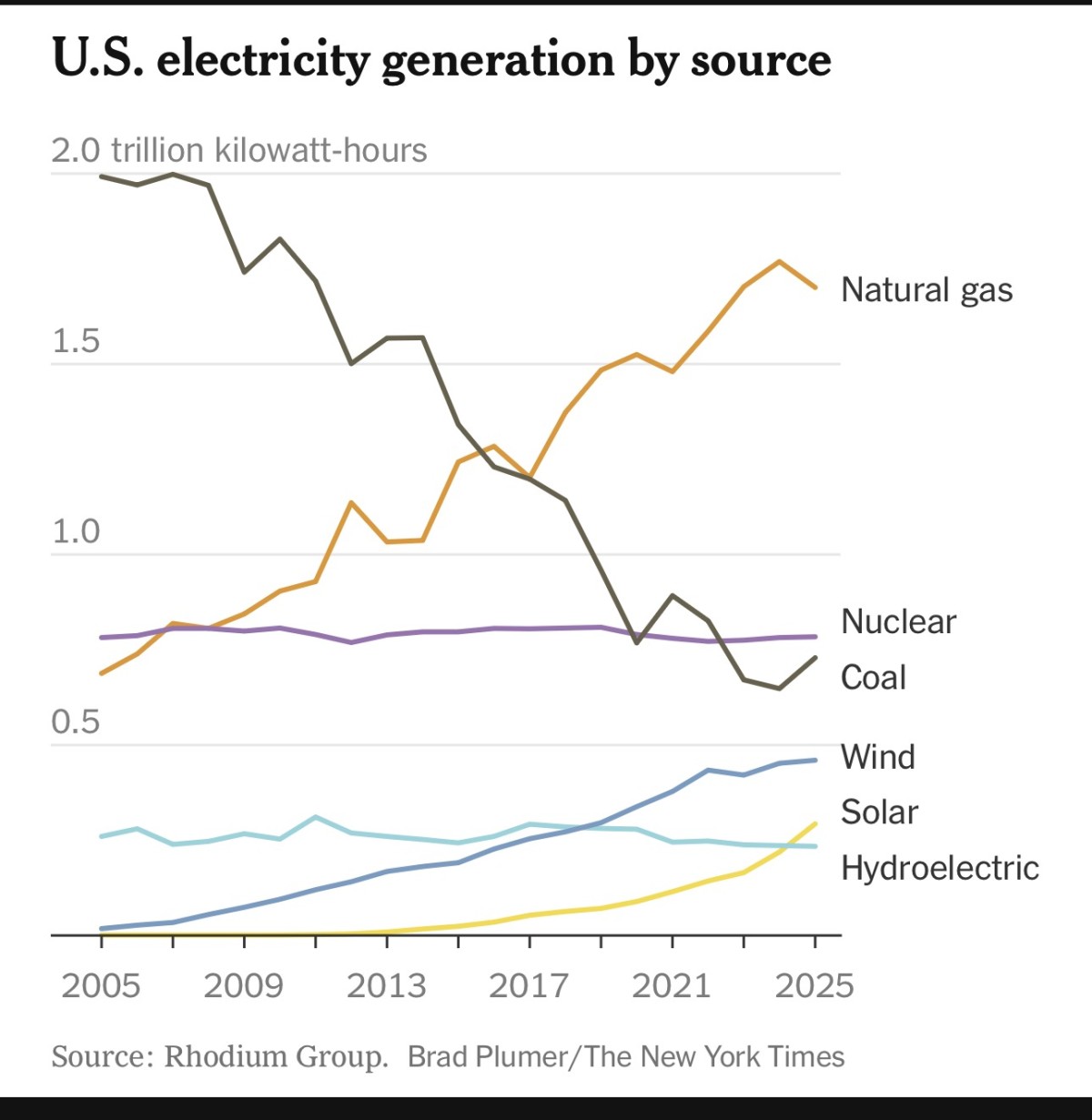
Coal consumption in the United States, however, has been declining for decades. Coal supplied more than half of the nation’s electricity in 1990, but its share had fallen to approximately 17 percent by 2025. Many coal plants are also decades old, and hundreds have already retired or announced plans to shut down.
At the same time, electricity demand is changing. Utilities are increasingly looking to natural-gas generation as they respond to growing power requirements from large artificial-intelligence data centers and other energy-intensive facilities. More than two dozen natural-gas plants were built in the United States during the previous year, according to energy-industry data.
Opponents of the EPA’s proposed action are preparing for a legal battle. Democratic-led states and environmental organizations have indicated that they are likely to challenge the policy, while some legal experts have questioned whether the agency’s approach will withstand court review.
The federal government’s authority to regulate carbon emissions from power plants has been the subject of major legal disputes for more than a decade. In 2016, the Supreme Court halted implementation of the Obama administration’s Clean Power Plan, which sought to reduce carbon emissions from coal-fired power plants.
Six years later, the Supreme Court ruled that the EPA has authority to regulate greenhouse gas emissions from the power sector but placed limits on how broadly the agency could use that authority. The ruling rejected an approach that would effectively require a nationwide shift away from coal and instead emphasized regulations focused on the operation of individual power plants.
The latest proposal is therefore likely to face both political opposition and renewed legal scrutiny as the Trump administration seeks to reshape the nation’s approach to power generation and climate regulation.
Source: NYTimes
What's Your Reaction?
 Like
0
Like
0
 Dislike
0
Dislike
0
 Love
0
Love
0
 Funny
0
Funny
0
 Wow
0
Wow
0
 Sad
0
Sad
0
 Angry
0
Angry
0