
Report Chiefs Pricing Lands In Foreign Currencies OASL Administrator Urges General Public
He further stressed that Ghana’s laws prohibit chiefs from engaging in multiple sales of the same parcel of land, disclosing that some traditional leaders are already facing prosecution for the practice.

---Says The Office Mobilizes GH¢405.32 Million, Records 113.9% Revenue Growth
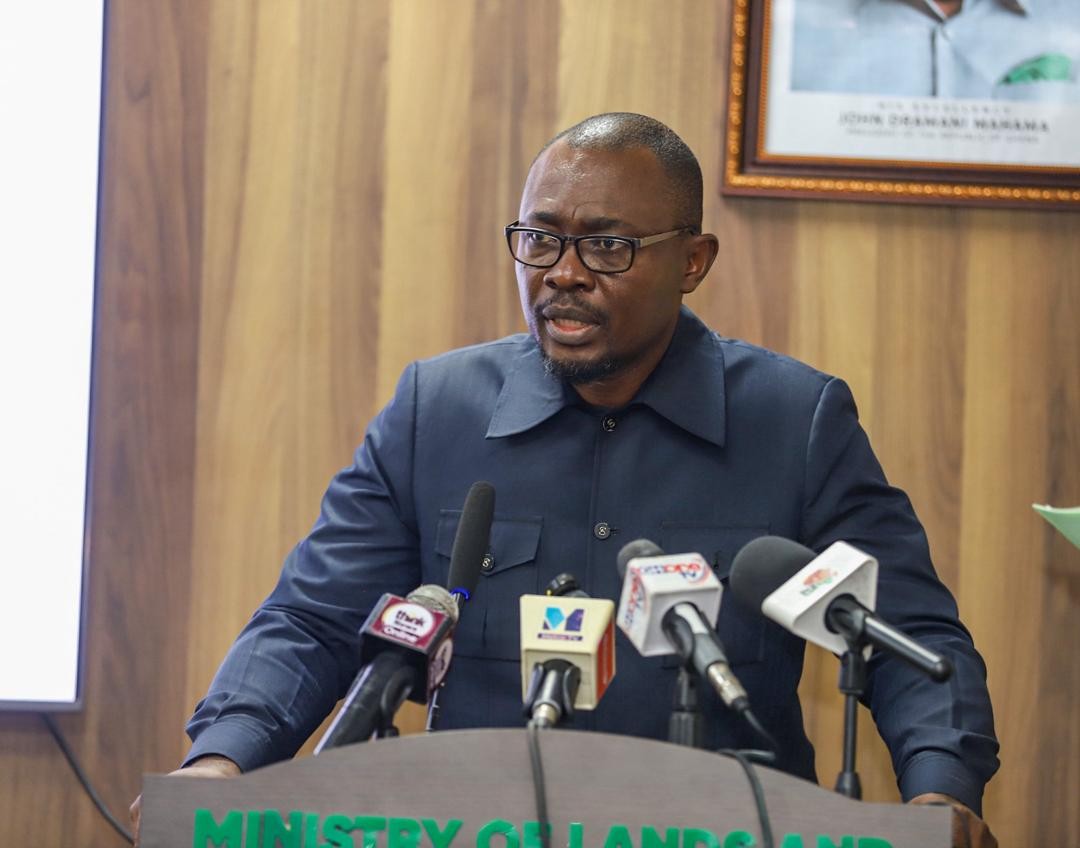
Administrator of the Office of the Administrator of Stool Lands (OASL) in Ghana, Dr. Gad Asorwoe Akwensivie,has urged Ghanaians to muster the courage to report chiefs and landowners who price and sell land in foreign currencies to the appropriate authorities so they can face the full rigors of the law.
He further stressed that Ghana’s laws prohibit chiefs from engaging in multiple sales of the same parcel of land, disclosing that some traditional leaders are already facing prosecution for the practice.
According to him, it is high time Ghanaians supported the government in enforcing the Bank of Ghana’s directive warning hotel owners and landowners against pricing land and hotel transactions in foreign currencies within the country.
The Administrator also expressed concern about the rising cost of land in the country, saying land prices have become excessively high.
According to him, customary lands are supposed to be leased rather than sold outright.
He explained that the premiums currently charged by some traditional authorities have, however, assumed the nature of open-market prices, contributing to the high cost of acquiring land.
Dr. Akwensivie said there is a need for improved land management practices and greater adherence to the legal framework governing customary land transactions.

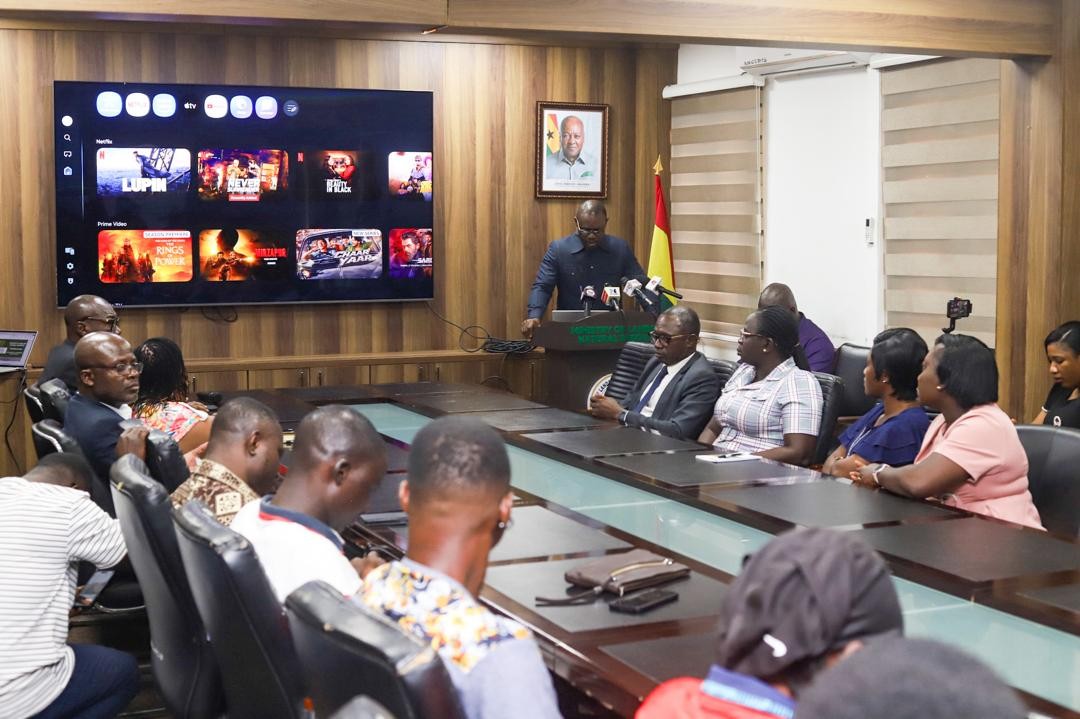
Addressing journalists during the state institutions accountability series held at the Ministry of Lands and Natural Resources on Tuesday November 24, 2026, Dr. Akwensivie stated that OASL is targeting over GH¢630 million in revenue mobilisation in 2027, following a significant increase in revenue collection over the past two years.
The office increased its revenue mobilisation from over GH¢189 million in 2025 to GH¢402 million in 2026, representing a substantial improvement in its revenue performance.
The Administrator of Stool Lands highlighted measures being implemented to improve land administration and address disputes involving customary lands.
As part of these interventions, je pointed out that the office is training traditional authorities in Alternative Dispute Resolution (ADR) to equip them with the skills to resolve land-related disputes outside the courts.
Dr. Akwensivie said the initiative is intended to reduce the number of land cases before the courts while promoting peaceful and effective dispute resolution within traditional communities.
He further stressed that Ghana’s laws prohibit chiefs from engaging in multiple sales of the same parcel of land, disclosing that some traditional leaders are already facing prosecution for the practice.
Dr. Akwensivie said there is a need for improved land management practices and greater adherence to the legal framework governing customary land transactions.
The revenue target and ongoing reforms form part of efforts by the Office of the Administrator of Stool Lands to strengthen revenue mobilisation, improve accountability and promote effective management of stool lands across the country.
He indicated his outfit's commitment to eliminating disputes associated with fees and charges in stool and customary land transactions in order to streamline customary land administration across the country.
He highlighted the core mandate of the Office of the Administrator of Stool Lands, saying that the institution is one of the two Land Sector Agencies in Ghana—the other being the Lands Commission—mandated to administer customary lands generally, with the key function of mobilizing and disbursing stool land revenue for sustainable national development.
According to him, the mandate of the Office of the Administrator of Stool Lands is enshrined in Article 267(2) and (6)–(9) of the 1992 Constitution, the Office of the Administrator of Stool Lands Act, 1994 (Act 481), the Office of the Administrator of Stool Lands Regulations, 2019 (L.I. 2377), the Land Act, 2020 (Act 1036), and the Fees and Charges (Miscellaneous Provisions) (Amendment) Regulations, 2025 (L.I. 2512).
He outlined the progress made by the Office of the Administrator of Stool Lands on stool land revenue mobilization, disbursement, and utilization.
He also reviewed the progress made by the Office on customary land administration and the establishment of customary land secretariats, as well as efforts to deepen stakeholder engagements and build the capacity of traditional authorities for efficient customary land administration.
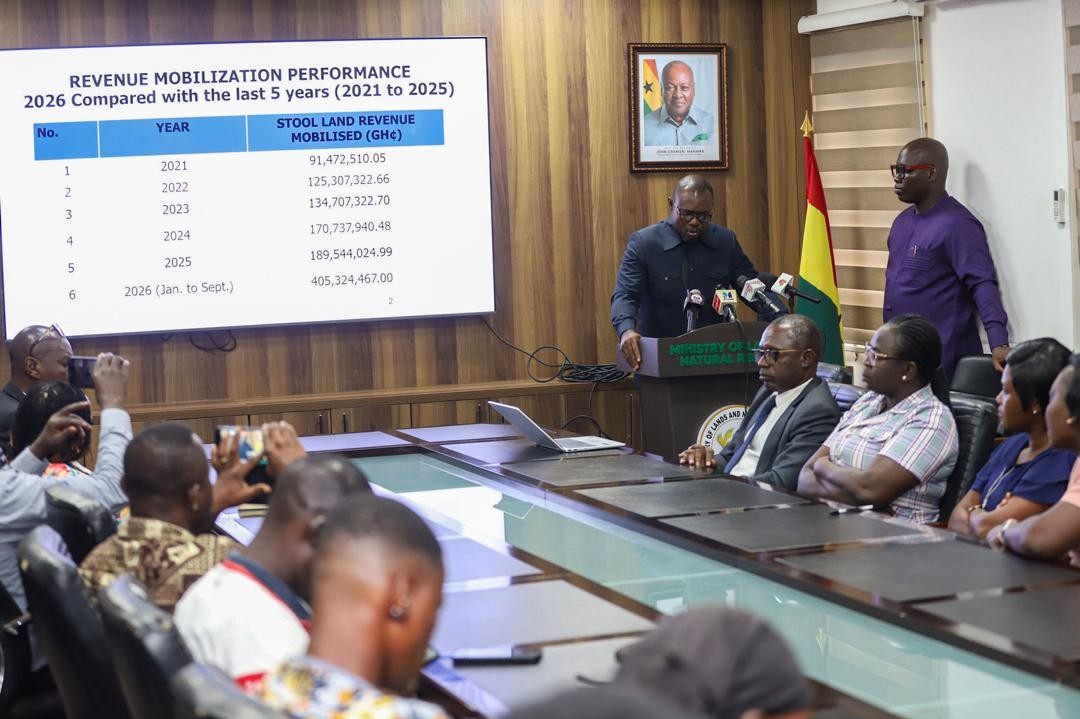
Regarding progress on stool land revenue mobilization, he pointed out that the Office of the Administrator of Stool Lands mobilized GHS 405,324,467.00 up to October 30, 2026, compared to a total of GHS 189,544,024.99 mobilized for the full year 2025. Below is a comparison of revenue mobilized over recent years.
On a year-on-year basis, he stated that stool land revenue mobilized (in GH¢) was as follows: 2021: 91,472,510.05, 2022: 125,307,322.66, 2023: 134,707,322.70, 2024: 170,737,940.48, 2025: 189,544,024.99, 2026 (Jan.–September.): 405,324,467.00.
According to him, this growth was made possible by several strategies, including the revision of rents, the opening of new offices and collection points, the digitalization of operations, and the monitoring of district and regional offices nationwide.
He mentioned that the funds have been disbursed to the respective beneficiaries as prescribed by law: 10% is paid to the Office to cover administrative expenses, and the remainder is treated as 100% and disbursed as follows: 25% to the land-owning stool, 20% to the traditional authority where the land is located, and 55% to the Metropolitan, Municipal, or District Assembly (MMDA) where the land is located.
In accordance with L.I. 2377, he pointed out that the MMDAs' portion of stool land revenue (55%) is intended for development projects.
He added that the Office has used proceeds from stool land revenue to fund numerous health, education, and water projects, which are reducing poverty in local communities across the country.
Progress in Customary Land Administration through Customary Land Secretariats
The Administrator stated that this year, the Office facilitated the establishment of 10 new Customary Land Secretariats, bringing the national total to 131.
According to him, the new secretariats are located atGreater Accra Region: Sempe (Accra), Katamanso (Accra), Nii Saka Maamobi (Accra), and the Adjetey, Agbosu, and Freeman Family (Accra), Eastern Region: Kwahu Obomeng (Nkawkaw) and Okuapeman (Akropong), Bono Region: Sunyani and Fiapre, Central Region: Affutuakwa (Assin Fosu) and Abakrampa.
He noted that establishing these secretariats aligns with the Land Act, 2020 (Act 1036), which aims to promote efficient and effective customary land administration by traditional authorities.
He pointed out that the Customary Land Secretariats are expected to perform several key functions, including recording interests and rights in land, and maintaining accurate, up-to-date records of land transactions within their jurisdictions, facilitating the settlement of land disputes through Alternative Dispute Resolution (ADR) mechanisms, facilitating the preparation of boundary and local plans to support sustainable land management, undertaking community education, sensitization, and awareness creation on land issues. preparing periodic accounts of all revenue received at the secretariat in accordance with Article 36, Clause 8 of the 1992 Constitution, among other duties.
In Stakeholder Engagement and Capacity Building for Traditional Authorities, the Administrator noted that the Office has engaged the National and Regional Houses of Chiefs alongside over 47 traditional authorities nationwide.
For the first time, he pointed out that the Office collaborated with the University of Professional Studies, Accra (UPSA) to design a short course that trained 67 traditional authorities in applying Alternative Dispute Resolution.
He maintained that the Office has conducted community sensitization in 836 communities—out of a target of 1,000—and aired 47 radio education programs nationwide.
He explained that these educational programs aim to: disseminate government policies, improve stakeholders' knowledge of land administration, e nhance community participation in mobilizing and utilizing stool land revenue and build consensus among stakeholders—including traditional authorities, Metropolitan, Municipal, and District Assemblies (MMDAs), and beneficiary communities—in administering customary lands.
Targets for 2027.
For 2027, the Administrator stated that the Office aims to achieve the following goals; pursue an ambitious target of mobilizing GHS 630,000,000 in stool land revenue, e stablish 50 new Customary Land Secretariats across the country.
He added that the Office deepens collaboration with key stakeholders, including the Lands Commission (LC), Forestry Commission (FC), Minerals Commission (MC), Land Use and Spatial Planning Authority (LUSPA), Stools and Skins, the National House of Chiefs (NHC), Regional Houses of Chiefs (RHC), and Traditional Councils.
Aaccording to him, the Office will partner with the Department of Land Economy at the Kwame Nkrumah University of Science and Technology (KNUST) to launch a short course on Customary Land Secretariat Management for traditional authorities, while strengthening its partnership with UPSA to build capacity in ADR.
He indicated the Office's preparedness to undertake 80 public education programs on land issues nationwide, monitor the utilization of stool land revenue by District Assemblies to ensure it helps alleviate poverty and supports the Government’s Reset Agenda.
What's Your Reaction?
 Like
0
 Dislike
0
 Love
0
 Funny
0
 Wow
0
 Sad
0
 Angry
0